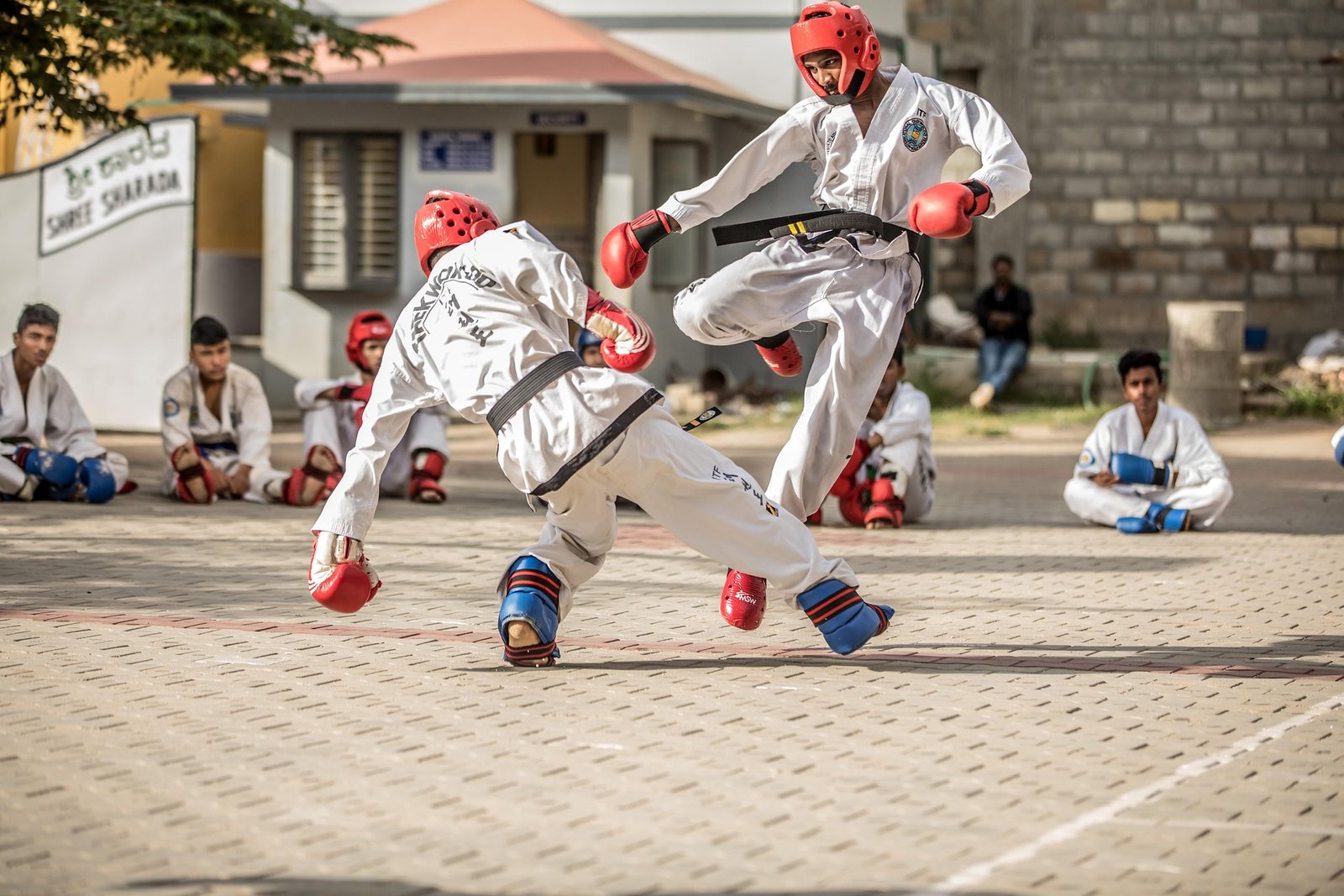
Taekwondo Weight Classes: Complete Competitor Guide
If you’re stepping into competitive sparring for the first time, one of the first things you’ll need to understand is where you actually fit. Taekwondo weight classes determine who you face on the mat, and getting this wrong—showing up unprepared for weigh-in, or picking the wrong division—can derail months of training in a single morning. This guide breaks down how taekwondo weight classes work, from Olympic divisions down to local tournament brackets.
Why Weight Classes Exist in Taekwondo
Sparring (kyorugi) in taekwondo is based on speed, timing, and technique; size is also an important factor. Weight classes are there to ensure a fair match; having players match according to weight allows contests to be judged on skill rather than a physical size advantage. If they don’t, the 130 lb teen might be ready to fight a 260 lb opponent, and he’s certainly not a winner in that scenario.
Why Trust This Guide: Taekwondo Fitness has been focusing on martial training, belt promotion, and fitness since 2022, relying on the standards set in Taekwondo by the governing body and training methods.
Olympic Taekwondo Weight Classes
At the Olympic level, World Taekwondo (WT) uses a condensed four-division format per gender—far fewer than the divisions used at World Championships, which helps keep the Olympic bracket manageable.
| Division | Men | Women |
| Flyweight | Under 58kg (128 lbs) | Under 49kg (108 lbs) |
| Featherweight | 58–68kg (128–150 lbs) | 49–57kg (108–126 lbs) |
| Welterweight | 68–80kg (150–176 lbs) | 57–67kg (126–148 lbs) |
| Heavyweight | Over 80kg (176 lbs) | Over 67kg (148 lbs) |
(Note: exact cutoffs can shift slightly between Olympic cycles—always confirm current figures against World Taekwondo’s official rules before a major event.)
Taekwondo Competition Weight Categories Beyond the Olympics
For all other World Championships, Olympics, and most senior events (when not in the Olympics), there are 8 divisions per gender, with a tighter, more competitive bracket for the competitors there. For color-belt and youth (under 18) students, regional and national federations (such as USA Taekwondo and AAU) may provide their own division structures; these are often a mix of age group and weight bracket and are vastly different from those of the adult Black Belt.
These youth and amateur divisions may differ widely in the organizations that use them and even in the rulebook for each tournament; therefore, the rulebook should always be consulted, not the Olympic-style divisions.
How Taekwondo Weigh-Ins Actually Work
Most tournaments run official weigh-ins the day before or the morning of competition. A few things trip up first-time competitors:
- Weigh-ins are typically a hard cutoff. Missing your division by even a few ounces can bump you into the next weight class or disqualify you from your registered division.
- Uniform weight sometimes counts. Some tournaments weigh you in your dobok (uniform); others don’t. Confirm this in advance.
- Rehydration windows are often short. If your event allows same-day weigh-in and competition, you may only have a few hours between weighing in and your first match.
How to Approach Weight Management Responsibly
Cutting weight is common across every weight-class sport, but doing it carelessly is one of the fastest ways to hurt performance instead of helping it. A few principles experienced competitors and coaches consistently emphasize:
- Start early, not last minute. Gradual adjustments over several weeks are safer and more sustainable than trying to make weight in the final 48 hours.
- Work with your coach or a sports nutrition professional, especially for youth athletes, rather than following generic online advice.
- Prioritize performance, not just the number on the scale. Showing up drained on fight day defeats the purpose of making a lighter division in the first place.
- Avoid extreme, rapid methods. Severe dehydration or crash dieting in the days before weigh-in can hurt reaction time, power, and focus exactly when you need them most.
If you’re ever unsure whether a weight-class decision is right for your body, that’s a conversation for your coach or a doctor—not a shortcut worth guessing on.
Common Mistakes Competitors Make
Picking a division based on ego, not fit. Cutting hard to compete in a lower class you’re not naturally suited for often backfires against competitors who didn’t have to cut at all.
Ignoring the rehydration window. Some athletes focus so much on making weight that they forget they still need to fuel and rehydrate before actually competing.
Not confirming rules in advance. Uniform weigh-in policies, age bracket cutoffs, and division structures vary by tournament—assuming Olympic rules apply everywhere is a common rookie error.
Final Thoughts
Understanding taekwondo weight classes isn’t just paperwork—it shapes who you’ll face, how you’ll train in fight camp, and how you’ll feel walking onto the mat. Whether you’re eyeing an Olympic-style bracket or your first local tournament, confirm the specific division rules for your event early, and build your preparation around performing at your best weight, not just the lowest number you can reach.
Ready to keep building toward your next rank? Check out our guides on the Taekwondo Red Belt and Taekwondo Black Belt to see what’s ahead on your journey.
4. Suggested Image Alt Text
- “Taekwondo competitors sparring in a weight-class match during a tournament”
- “Official weigh-in scale used before a Taekwondo competition”
- “Taekwondo athlete preparing for competition at their weight division”
5. FAQ Section
Q1: How many weight classes are there in Olympic Taekwondo?
Olympic taekwondo uses four weight divisions per gender—flyweight, featherweight, welterweight, and heavyweight—a condensed format compared to the eight divisions used at World Championships.
Q2: What happens if I miss weight at a Taekwondo tournament?
Most tournaments treat weigh-in as a hard cutoff. Missing your registered division typically means being moved to the next weight class or, in some cases, disqualification—so always check your event’s specific policy in advance.
Q3: Do youth Taekwondo divisions use the same weight classes as adults?
No. Youth and color-belt divisions are usually organized by combining age group and weight bracket, and these structures vary significantly between organizations like USA Taekwondo, AAU, and individual tournaments.
Q4: Is cutting weight necessary for Taekwondo competition?
Not necessarily. Many competitors compete at their natural weight. Cutting weight is a strategic choice some athletes make, but it should be done gradually and under a coach’s guidance, not as a last-minute rush.
Q5: Does your uniform count toward your weigh-in weight?
It depends on the tournament. Some events weigh competitors in their dobok; others don’t—always confirm this with tournament officials beforehand to avoid surprises.