Taekwondo Green Belt Form: Taegeuk Sam Jang Step-by-Step
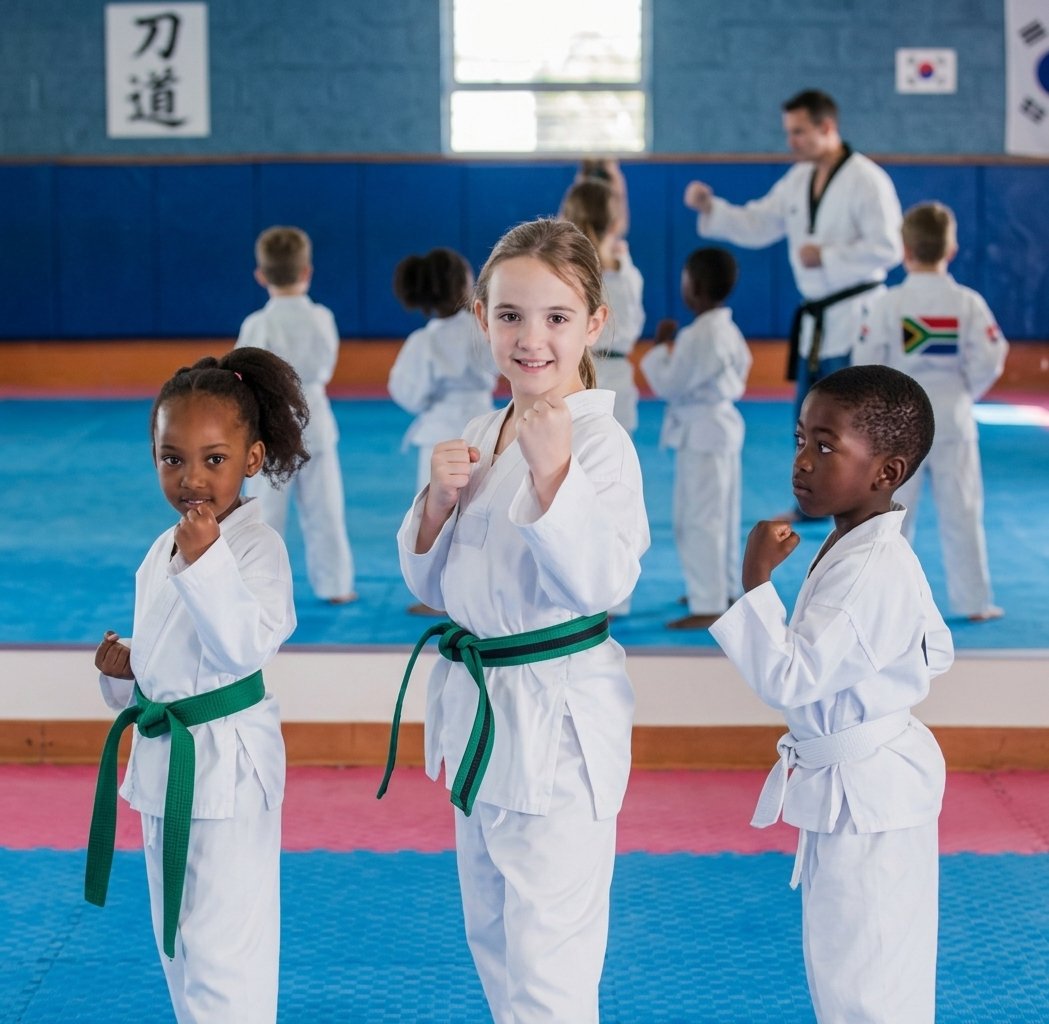
If you’ve just earned your Green Belt, you’ll typically learn the Taekwondo Green Belt Form, Taegeuk Sam Jang, the third of the eight Taegeuk forms used in the Kukkiwon/World Taekwondo curriculum. This guide explains what it means, the stances and techniques to use, and a step-by-step walk-through to practice it.
Language: Note before you begin: the mapping of belts to forms is not the same at all Taekwondo schools. Other programs (particularly some ITF-supported or self-branded U.S. schools) grade Taegeuk Sa Jang (4th form) to green belt. If your instructor taught you a different form for green belt, use the form you learned, as this guide is based on Taegeuk Sam Jang, the most commonly mentioned form.
What Does Taegeuk Sam Jang Mean?
Taegeuk Sam Jang represents the trigram Ri, which symbolizes fire—hot, bright, and full of energy. The form is meant to be performed with variety and passion, echoing the flickering, changing nature of flame. Where earlier forms focus on foundational stances and single techniques, Sam Jang introduces your first real combinations—front kick into a double punch, for example—the kind of linked movements you’ll later use in sparring.
Why This Form Matters
- It’s the first form that combines a kick directly into a striking combination, building toward free-sparring skills
- It introduces knife-hand blocking techniques used throughout the rest of the curriculum
- Testing boards typically expect clean transitions between stances, not just correct individual moves
Key Terms Used in This Form
| Korean Term | English Meaning |
| Joon-bi Seogi | Ready stance |
| Ap Seogi | Walking stance |
| Momtong Jireugi | Middle punch |
| Arae Makki | Low block |
| Sonnal Makki | Knife-hand block |
| Dwitkubi Seogi | Back stance |
| Ap Chagi | Front kick |
| Kihap | Shout/spirit yell |
Taegeuk Sam Jang — Step-by-Step Breakdown
- Starting position: Begin in Joon-bi Seogi (ready stance), facing forward.
- Turn left: Step into a walking stance facing left and execute a low block with your left arm.
- Front kick + combination: Bring your right leg up for a front kick, then land it forward while delivering a middle punch—followed immediately by a second punch with the opposite hand.
- Turn 180°: Pivot on your lead foot to face the opposite direction, stepping into a low block on the new side.
- Mirror the combination: Repeat the front kick and double-punch combination on this side.
- Center turn: Turn to face the center line, stepping into a middle block.
- Knife-hand sequence: Step forward and execute a knife-hand block, transitioning into back stance.
- Repeat the pattern: The form continues with mirrored turns and combinations along the embusen (the floor pattern), finishing back near the starting point.
- Kihap: A shout (kihap) is typically called at one of the punching combinations to show focus and power.
- Return to ready stance: Finish by stepping back into Joon-bi Seogi.
(Exact step counts and minor sequencing can vary slightly by school—always defer to your own instructor’s version for testing.)
Common Mistakes to Avoid
- Rushing the kick-to-punch transition—the front kick should fully chamber and retract before the foot lands into the punching stance, not just “step and punch.”
- Sloppy 180° turns—losing balance on pivots is one of the most common points testers deduct for
- Weak knife-hand position—fingers should be together and tense, not loose or splayed
- Forgetting the kihap—many testing boards specifically listen for it as a sign of committed technique
How to Practice Effectively
- Break the form into sections (first 4 moves, next 4, etc.) rather than trying to run the whole thing at full speed immediately
- Practice in front of a mirror to check stance width and hand positioning
- Slow the form down first for accuracy, then build up speed once the sequence is automatic
- Ask your instructor to check your embusen (floor pattern)—drifting off-line is a common issue at this level
Frequently Asked Questions
Is Taegeuk Sam Jang always the green belt form?
Not universally. Most Kukkiwon/WT-affiliated schools use Sam Jang for green belt, but some programs assign Taegeuk Sa Jang instead. Check with your own instructor to confirm which form you’ll be tested on.
How long does it take to learn this form?
Most students can learn the basic sequence within a few weeks of regular practice, though refining stances, power, and timing to testing standards usually takes longer.
What comes after Taegeuk Sam Jang?
The next form in the standard Kukkiwon sequence is Taegeuk Sa Jang, typically associated with a blue belt or a blue-belt stripe rank depending on the school.
Do I need to know the meaning of the form for my belt test?
Some schools ask about the form’s meaning (the Ri/fire symbolism) as part of testing, especially at higher youth and adult ranks—it’s worth knowing even if it isn’t always required.
The Bottom Line
Taegeuk Sam Jang is where taekwondo forms start to feel less like isolated moves and more like real combinations—the kick-punch-punch sequence you’ll practice here shows up again in sparring. Focus on clean transitions and stance control before chasing speed, and always confirm the exact version your own school tests with your instructor.