Does Taekwondo Actually Work? 5 Brutal Facts Exposed
It is devastating when you look at a taekwondo practitioner kicking in a spinning motion with lightning speed. However, would this classic martial art of the Koreans really stand up in the real world? You are about to spend some time and money on that crisp white uniform, so before you put your money and time into it, let us cut across the promotional videos and see what taekwondo actually has to offer.
The Real-World Effectiveness Question
Taekwondo has undergone significant evolution since its origins in Korea in the 1940s and 1950s. It is currently an Olympic sport and is practiced by millions of people across the world. Nonetheless, the issue of practical efficiency is still under intense discussion by martial artists and self-defense specialists.
The reality is more complex than yes or no issues. The performance of taekwondo relies on your intentions, the style in which you train, and the way your teacher teaches you to fight in different situations.
Brutal Fact #1: Your Kicks Won’t Always Save You
The Limitations of High Kicks in Street Fights
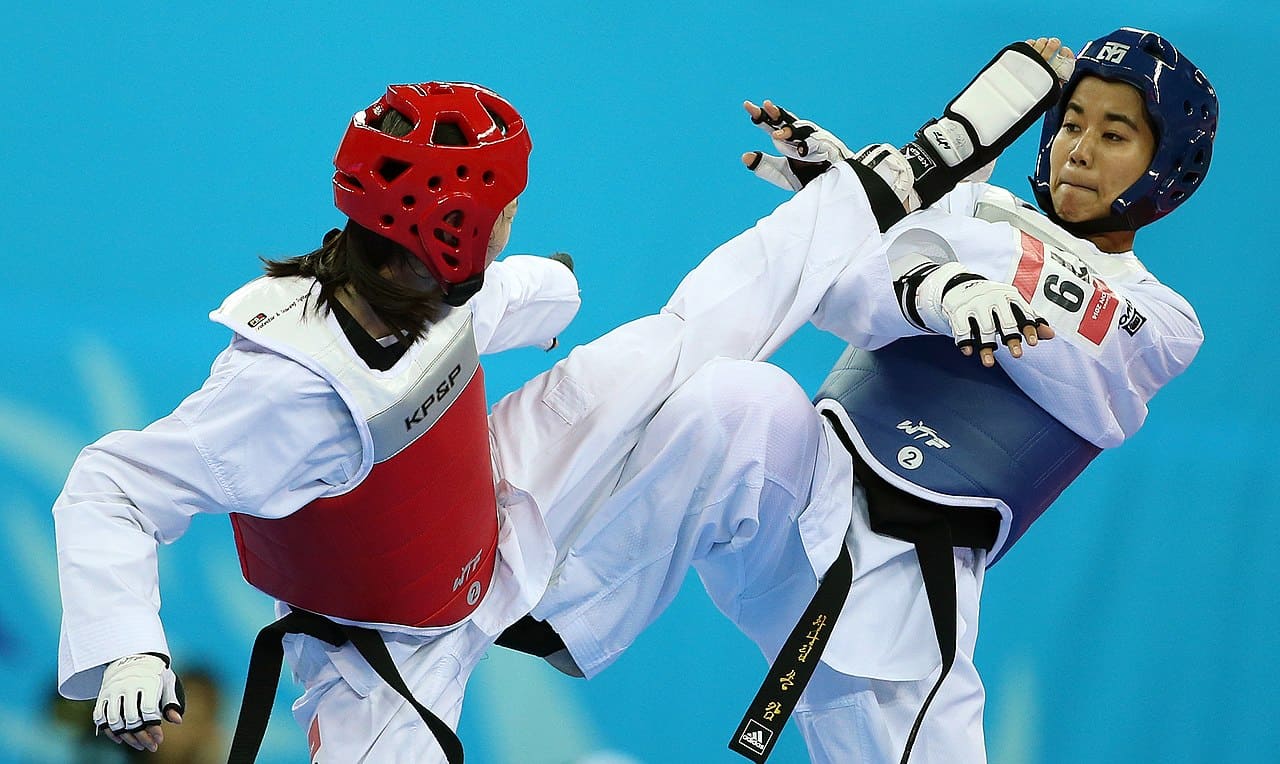
Taekwondo is renowned for spectacular high kicks, including the famous head-height roundhouse and spinning techniques. While these moves score points in competition and look impressive in demonstrations, they present serious vulnerabilities in uncontrolled environments.
Consider these realities:
- Balance risks: Executing a high kick means standing on one leg, making you susceptible to being taken down
- Environmental hazards: Tight clothing, slippery surfaces, or cramped spaces severely limit your kicking range
- Telegraphing: High kicks require wind-up time, giving observant opponents a chance to counter
- Energy expenditure: These techniques burn significant energy that you may need to conserve in prolonged encounters
However, taekwondo’s low kicks—often underemphasized in sport-focused schools—can be devastatingly effective. Leg kicks, sweeps, and knee-level strikes require less commitment and offer quicker recovery.
Brutal Fact #2: Sport Taekwondo Creates Bad Habits
The Competition Mindset Problem
Modern Olympic-style taekwondo has diverged significantly from its martial roots. The competition ruleset has created training patterns that can be counterproductive for self-defense.
Points-based sparring encourages practitioners to:
- Drop their hands below their chin to focus on kicking exchanges
- Bounce constantly in an upright stance that exposes the centerline
- Prioritize speed and point-scoring over power and damage
- Ignore grappling entirely, despite most street confrontations involving clinching or ground fighting
Many taekwondo schools have become “daycare centers with uniforms,” focusing primarily on children’s character development and belt promotions rather than functional fighting skills. If your school’s sparring looks more like a rhythmic dance than combat preparation, you’re not learning practical self-defense.
Brutal Fact #3: Cross-Training Is Almost Mandatory
Does Taekwondo‘s Glaring Gaps
No martial art covers everything, and taekwondo has particularly noticeable deficiencies in several critical areas.
What’s Missing:
- Ground fighting: Taekwondo offers virtually zero training for what happens when you’re taken down
- Hand techniques: While punches exist in taekwondo, they’re significantly underdeveloped compared to boxing or karate
- Clinch work: Close-range grappling, throws, and dirty boxing aren’t part of the standard curriculum
- Weapon defense: Most schools don’t address armed attackers realistically
For comprehensive self-defense capability, serious practitioners often supplement taekwondo with Brazilian Jiu-Jitsu for groundwork, boxing for hand striking, or Muay Thai for clinch fighting. The legendary Anderson Silva combined taekwondo kicks with a complete mixed martial arts skillset—a blueprint worth following.
Brutal Fact #4: The Conditioning Benefits Are Legit

Where Taekwondo Genuinely Excels
Despite tactical limitations, taekwondo provides exceptional physical development that translates to success in combat sports and self-defense scenarios.
Proven Physical Benefits:
- Explosive power: The emphasis on dynamic kicking builds fast-twitch muscle fibers
- Flexibility: Regular practice significantly improves the range of motion, reducing injury risk
- Coordination: Complex techniques enhance body awareness and motor control
- Cardiovascular endurance: Intensive sparring sessions provide excellent cardio training
- Core strength: Maintaining balance during kicks develops abdominal and back muscles
This athletic foundation means taekwondo practitioners who cross-train often excel rapidly in other martial arts. Your conditioning, reflexes, and pain tolerance from years of taekwondo practice provide a substantial advantage.
Brutal Fact #5: The Instructor Matters More Than the Art
Finding Reality-Based Training
The most critical factor determining whether taekwondo “works” for you is the quality and philosophy of your instructor. Two taekwondo schools in the same city can offer radically different experiences.
Red Flags to Avoid:
- Guaranteed black belt timelines or “black belt clubs” that prioritize revenue
- No contact or extremely light sparring that doesn’t test techniques under pressure
- Instructors who’ve never competed or trained in other martial arts
- Excessive focus on forms and belt tests rather than practical application
- Dismissive attitudes toward other fighting styles
Green Flags to Seek:
- Instructors with cross-training experience or combat sports backgrounds
- Regular hard sparring with protective equipment
- Emphasis on practical self-defense scenarios alongside traditional techniques
- Open acknowledgment of taekwondo’s limitations and complementary training recommendations
- Adult classes that maintain martial intensity rather than becoming fitness-only sessions
The Final Verdict: Context Is Everything
Is taekwondo actually working? The candid response to this is that it all hinges on what you consider work.
In Olympic-style competition, it is clearly preferable that you use taekwondo, because that is the art of that set of rules. Not only does taekwondo provide the use of explosive kicking ability, flexibility, and overall athleticism, but it also develops these. Quality taekwondo training will be of immense benefit in the development of discipline, confidence, and mental toughness.
Full self-defense or a separate system of mixed martial arts? Taekwondo cannot do without supplementation.
The taekwondo practitioners that are the most effective are the ones that have to be realistic in their expectations, put their skills to the test on a regular basis, recognize the limitations truthfully, and supplement the training with other martial arts in order to plug the gaps.
In case you are thinking of taekwondo, go to several schools, observe real sparring, and ask about real-life application. Components in the art have since been proved—all you need is an instructor who can teach them with earnestness and with authenticity.


